
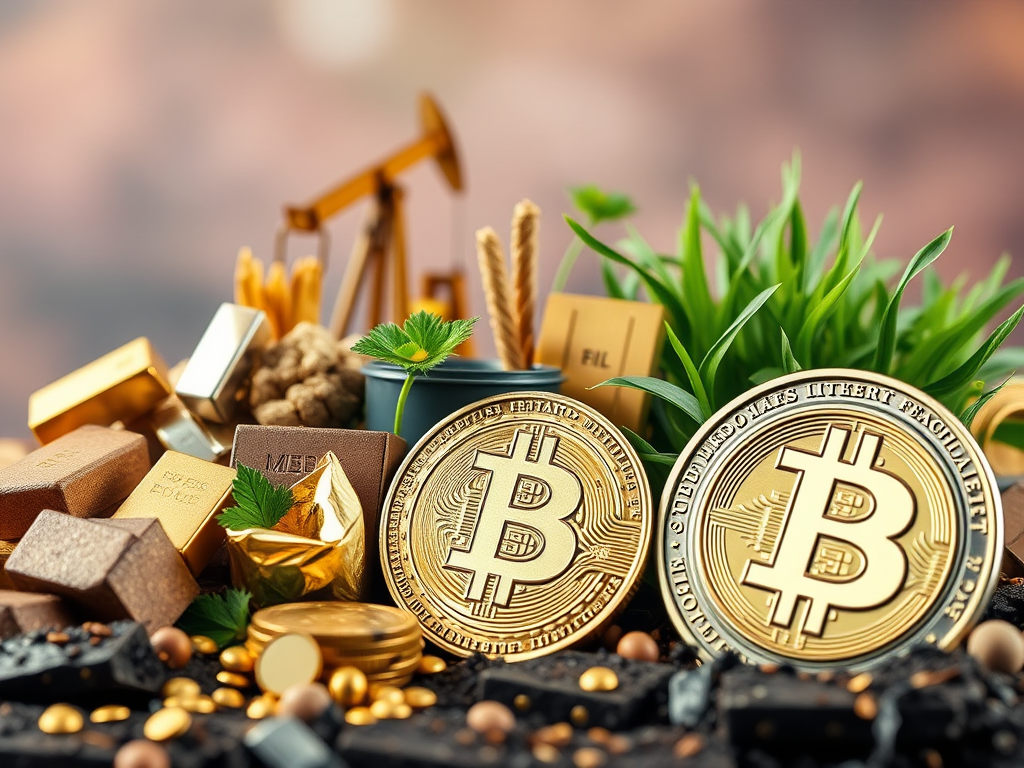
In today’s unpredictable economic climate, investors increasingly seek ways to safeguard their portfolios against inflation and market volatility.
Commodity ETFs have emerged as a dynamic solution, offering diversified exposure across various asset classes—from time-tested precious metals to innovative alternatives like cryptocurrency, food, and water resources.
“The individual investor should act consistently as an investor and not as a speculator.” – Benjamin Graham
This post will guide you through the world of commodity ETFs, explain the underlying concept of spot prices and how ETFs track them, and illustrate why these funds are a smart tool for portfolio diversification. Buckle in, this is an extensive one.
Commodities as an Inflation Hedge
Inflation—the gradual rise in prices and the erosion of purchasing power—has long been a nemesis for investors. When inflation occurs, the purchasing power of money declines, but tangible assets tend to hold their worth.
By their very nature, commodities are physical goods in limited supply and have intrinsic value, which is the perceived value of an asset. People buy gold because gold has had value throughout human history.
As inflation drives up the cost of goods and services, the prices of commodities typically follow suit. This is because the same economic factors that cause consumer prices to rise—such as increased demand, supply shortages, or rising production costs—also push up commodity prices.
Increases in commodity prices can also lead to inflation. For example, when there have been oil price shocks, the overall cost of goods and services increased. At the simplest level, that is because of oil’s importance in transporting basic goods and services.
By owning commodities via ETFs, investors gain exposure to the price movements of these essential goods without needing to purchase and store the physical products. This makes commodity ETFs an attractive option for preserving wealth during inflationary periods.
Nothing better illustrates the relationship between commodity prices and inflation than two popularly tracked economic gauges.
- Producer Price Index (PPI): measures the price change paid to U.S. producers of goods and services. Commodity prices are the inputs to producers and heavily influence PPI.
- Consumer Price Index (CPI) measures the change in the price at which U.S. consumers pay for goods and services.
Below are interactive graphs of PPI and CPI provided by the St. Louis Federal Reserve. You will be able to quickly see the relationship between the two indices. Steep increases in PPI often results in elevated inflation.
Producer Price Index
Consumer Price Index
Understanding Commodity ETFs
What Is the Spot Price?
At the heart of commodity investing is the spot price—the current market price at which a commodity can be bought or sold for immediate delivery. For example, the spot price of gold is the current price per ounce at which gold is traded on the market. This price serves as the benchmark for many commodity ETFs.
How Do Commodity ETFs Track Spot Prices?
- Physically-Backed ETFs: These funds hold the actual physical commodity (like gold bullion or silver bars). Their value closely mirrors the spot price because the fund’s assets are directly linked to the commodity.
- Futures-Based ETFs: Instead of holding the physical commodity, these ETFs invest in futures contracts and agreements to buy or sell a commodity at a predetermined price on a specific date. While this method exposes the commodity’s price movements, it can lead to tracking errors due to contract rollovers and other factors.
Key Benefits
- Transparency: Investors can see how the spot price influences the ETF’s performance.
- Simplicity: ETFs eliminate the need for investors to directly purchase and store commodities while still capturing the price dynamics of the underlying asset.
- Diversification: Whether through physical holdings or futures, commodity ETFs allow investors to diversify their portfolios across different asset classes with relative ease.
Broad-Basket Commodity ETFs
Before delving into more specialized categories, it’s worth considering broad-basket commodity ETFs. These funds provide exposure to a diversified mix of commodities, reducing the risk associated with any single commodity’s volatility.
Broad-basket commodity ETFs typically track indices, including various assets—energy, metals, agriculture, etc. This diversification helps smooth out the impact of price fluctuations in any sector, making these ETFs a compelling option for investors seeking a balanced approach.
Themed Commodity ETFs
Commodity ETFs come in many flavors. Below, we explore several key categories that can enrich your portfolio.
One thing to note – Commodity ETFs do not yield dividends and they often have higher than average expense ratios to pay for the cost of housing physical commodity assets and tracking their prices.
Metals ETFs
Precious metals have always been the bedrock of wealth preservation. Gold and silver ETFs, such as SPDR Gold Shares and iShares Silver Trust, are classic choices for investors seeking stability during turbulent times. But metals ETFs extend beyond these familiar names.
- Gold & Silver: Traditional safe havens and proven inflation hedges.
- Other Metals: ETFs tracking platinum, palladium, and industrial metals like copper, platinum, and palladium provide exposure to sectors essential for manufacturing and industrial growth.
| Name | Ticker | Expense Ratio | AUM |
|---|---|---|---|
| SPDR Gold Shares | GLD | 0.40% | $80.3B |
| SPDR Gold MiniShares | GLDM | 0.10% | $10.5B |
| iShares Silver Trust | SLV | 0.50% | $13.9B |
| Aberdeen Standard Physical Platinum Shares ETF | PPLT | 0.60% | $1.0B |
| Aberdeen Physical Palladium Shares ETF | PALL | 0.60% | $346.0M |
| United States Copper Index Fund | CPER | 0.97% | $174.6M |
| Aberdeen Precious Metals Basket ETF | GLTR | 0.60% | $1.17B |
Energy ETFs
Energy remains one of the world’s most critical and dynamic sectors. Energy ETFs come in several forms:
- Oil & Natural Gas: ETFs like the United States Oil Fund provide exposure to traditional fossil fuels, whose prices are influenced by geopolitical events and global supply-demand dynamics.
| Name | Ticker | Expense Ratio | AUM |
| United States Oil Fund | USO | 0.80% | $1.13B |
| Invesco DB Energy ETF | DBE | 0.77% | $55M |
| United States Natural Gas Fund | UNG | 1.06% | $739M |
| United States Gasoline Fund | UGA | 0.97% | $93.9M |
- Renewable Energy: With a growing focus on sustainability, renewable energy ETFs capture the momentum behind solar, wind, and other clean energy sources, aligning investment strategies with environmental, social, and governance (ESG) criteria. These ETFs invest in the companies who produce clean energy, which makes sense since you can’t stockpile air and sunlight.
| Name | Ticker | Expense Ratio | AUM |
| iShares Global Clean Energy ETF | ICLN | 0.41% | $1.32B |
| Invesco Solar ETF | TAN | 0.67% | $788M |
| First Trust Global Wind Energy ETF | FAN | 0.60% | $133M |
| Roundhill Physical Uranium | UX | 0.75% | $0.2M |
Note: Physical Uranium ETFs are just beginning to emerge, which is why UX has a small AUM. UX started trading on Jan 29, 2025. Sprott Uranium (URNM) holds 10% of its assets in physical Uranium.
Agriculture & Crop ETFs
Agriculture ETFs offer a unique window into a sector that feeds the world. Yet, to capture the full spectrum of food-related investments, looking at ETFs that track crops, livestock, and specific food commodities is valuable.
Unique and Alternative Commodity ETFs
Beyond the traditional sectors, innovative commodity ETFs expose less conventional yet increasingly important assets.
- Water ETFs: With water scarcity emerging as a critical issue, ETFs like Invesco Water Resources and iShares Global Water ETF offer exposure to companies focused on water purification and distribution.
- Timber ETFs: Sustainable forestry ETFs, such as the iShares Global Timber & Forestry ETF, enable investors to tap into a unique asset class.
- Lithium & Battery Metals ETFs: As electric vehicles and renewable energy storage grow in importance, ETFs tracking lithium and battery metals are gaining traction.
- Carbon Credit ETFs: These emerging ETFs track carbon credits, offering exposure to environmental commodities and supporting the global shift toward reducing greenhouse gas emissions.
- Rare Earth & Industrial Minerals: These ETFs focus on niche sectors and cater to the high-tech and defense industries.
- Base Metals ETFs: ETFs like the Invesco DB Base Metals Fund provide exposure to industrial metals such as aluminum and zinc for added diversification.
Cryptocurrency ETFs
As digital assets continue to shake up traditional financial markets, cryptocurrency ETFs are becoming a compelling, albeit volatile, addition to any diversified portfolio. Bitcoin and Ethereum ETFs offer exposure to digital currencies without the need to manage digital wallets or navigate complex exchanges.
While still in their infancy compared to metals, these ETFs are paving the way for more diverse digital asset offerings in the future. Presently, there are only ETFs tracking the spot prices of Bitcoin and Ethereum.
| Name | Ticker | Expense Ratio | AUM |
| iShares Bitcoin Trust ETF | IBIT | 0.25% | $55.8B |
| Fidelity Wise Origin Bitcoin Fund | FBTC | 0.25% | $20.3B |
| iShares Ethereum Trust ETF | ETHA | 0.25% | $3.65B |
| Fidelity Ethereum Fund ETF | FETH | 0.25% | $1.21B |
Additional Bitcoin and Ethereum ETFs can be found here.
Considerations When Investing in Commodity ETFs
While commodity ETFs offer diverse benefits, they also come with unique risks:
- Market Volatility: Prices can be highly volatile due to geopolitical events, natural disasters, and economic cycles.
- Expense Ratios and Tracking Errors: Variations in fees and tracking methods can impact returns.
- Liquidity and Trading Volume: Ensure the chosen ETFs have sufficient liquidity for easy trading.
- Global Economic and Geopolitical Influences: International events and policy changes can affect commodity prices, influencing ETF performance.
“Every investment comes with risks, but understanding them is the first step to mastering the market.”
– A Fellow Pleb
Closing
Commodity ETFs are a versatile tool that can help investors navigate inflationary pressures and diversify their portfolios across a broad spectrum of assets.
Whether you’re drawn to the timeless allure of precious metals, the cutting-edge world of cryptocurrency, the essential nature of food and agriculture, or the innovative opportunities in alternative commodities, there’s an ETF to match your investment philosophy.
As the market evolves, staying informed and flexible will be key. Dive deeper into these options, consult up-to-date resources, and consider how commodity ETFs can be valuable to your overall investment strategy.
Don’t miss our next post—where we’ll explore Growth, Value, and Momentum ETFs to help you further refine your portfolio strategy!
Additional Resources
For those looking to further their research:
- Interactive ETF Screening Tools: Discover and compare ETFs based on expense ratios, dividend payouts, etc. via VettaFi’s ETF Database here.
- Further Reading: Explore our other articles here.
By arming yourself with knowledge and staying abreast of market developments, you can harness the power of commodity ETFs to build a more resilient investment portfolio. Please don’t forget to like and subscribe. Happy investing!
Leave a Reply