

Welcome, fellow plebs and members of the 99%. Happy New Year! 2025 has ended, and 2026 is here. Here we recap the Plebdex’s 2025 performance and reveal our investments and thesis for 2026.
2025 Market Recap
2025 was certainly a rollercoaster ride. The overarching theme of 2025 was “Tenuous Resilience.” Despite fears of a recession, a renewed trade war with century-high tariffs, a 20% drawdown in stocks, and geopolitical instability, the global economy kept chugging along, fueled by “Trump 2.0” and the relentless AI-driven Capital Expenditures (CAPEX).
Investment Themes
Going into 2025, we identified several themes we believed would influence market direction in the coming year. With any set of hypotheses, some pan out, some are inconclusive, and others warrant further exploration. Let’s recap these ideas:
Missed the Mark
Fiscal, Monetary, & Trade Policies
- Monetary Policy
- We expected the road to 2% y/y inflation to be tricky, tempering the case for rate cuts. However, the Federal Reserve has a dual mandate: keep inflation and unemployment low. There are times when the risk of one mandate outweighs the risk of the others. The Fed made this risk calculus clear when it cut rates 3 times for a total of 75 bps (0.75%) in the face of a deteriorating labor market, tariff shocks, and a government shutdown.
- We only expected one cut for 25-50 bps for 2025.
- We expected the road to 2% y/y inflation to be tricky, tempering the case for rate cuts. However, the Federal Reserve has a dual mandate: keep inflation and unemployment low. There are times when the risk of one mandate outweighs the risk of the others. The Fed made this risk calculus clear when it cut rates 3 times for a total of 75 bps (0.75%) in the face of a deteriorating labor market, tariff shocks, and a government shutdown.
Market Rotation
- We believed money would continue to rotate out of Megacap tech and into the other 493+ companies in the S&P 500. This did not play out in 2025, as the hyperscalers continued to drive earnings and stock market growth, resulting in underperformance in the equal-weight S&P 500. 7 companies continue to account for 36% of the S&P500.
Cloud, AI, Robotics, & Autonomy
- Amazon (AMZN): returning a weak 4% to investors, Amazon missed the mark. Higher CAPEX combined with reduced free cash flow keeps investors tepid on this hyperscaler as the AI trade becomes a “show me” story.
Cybersecurity
- The broader Cybersecurity sector underperformed the wider market as investors lumped these companies in with the broader software sector, with the likes of Salesforce and Adobe.
Financial Technology and Bitcoin
- Bitcoin (IBIT) underperformed, down 10% for the year, as other fiat-debasement trades Gold (GLD) and Silver (SLV) returned 62.2% and 143%, respectively.
- PayPal was the Plebdex’s worst-performing asset, down nearly 33%. We continue to view PayPal as materially underowned, underappreciated, and misunderstood. We see this as a communication desync between the investment and analyst communities and the company’s leaders. Ironically, PayPal is the only company to have announced an OpenAI deal that led the stock to 52-week lows.
Jury’s Still Out
Fiscal, Monetary, & Trade Policies
- Fiscal Policy
- DOGE – while the initiative has mostly been sidestepped, we believe the idea is vital for the long-term viability of the U.S.
- As deficits grow, treasury departments will issue more debt. To issue more debt, there must be a buyer. Treasury (Bond) prices will continue to decline as fewer buyers are willing to take on debt. As bond prices fall, their yields, expressed as percentages, increase. Said differently, as a government continues to issue debt at an unsustainable level, the bond market will reprice debt, keeping underlying interest rates elevated.
- We’ve marked this as a Jury’s Still Out – long-term rates remain elevated with the housing market feeling the most pressure.
- DOGE – while the initiative has mostly been sidestepped, we believe the idea is vital for the long-term viability of the U.S.
Energy Policy
- We recommended two energy sectors for 2025 carbon (XLE) and uranium (URNM).
- The carbon sector continued to underperform, returning 6% with dividends reinvested.
- A long-term holding of the Plebdex, the Uranium sector continued to rally, returning 31% with dividends.
Spot On
China
- Our goal in 2025 was to derisk a share of our portfolio’s revenue/earnings from China. We stand by our statement from late 2024 – “As long as Xi Jinping is in power, China will remain uninvestable.”
- The equal-weighted S&P500 (GSEW) underperformed the market-weighted S&P500 (SPY) by around 500 basis points (5%). Despite the underperformance, we still like fairer valuations of the greater 493 vs. the MAG7.
- Diversifying away from Taiwan Semiconductor, we viewed Intel (INTC) as strategically important to the U.S. economy and expected government intervention to facilitate a homegrown semiconductor operation.
- In August, the Trump administration took a 10% stake in Intel, followed by Softbank taking a 2% stake.
- In December, Nvidia completed a $5 billion investment for a 4% stake in Intel.
- At its peak on December 3rd, Intel had a 115% YTD return, giving back some of the gains to close at the year around +86%.
- We viewed Kratos Defense & Security (KTOS) as materially underappreciated in 2024. It became the Plebdex’s best-performing asset of 2025, returning 187%
Fiscal, Monetary, & Trade Policies
- Trade Policy
- We expected volatility from the Trump 2.0 tariff policies in 2025, with these events being “buy-the-dip” opportunities. The “Liberation Day” tariffs sent the S&P 500 down 20% at its low. From there, the index rallied 38% to a record, shy of 7,000.
Healthcare and Biotechnology
- Healthcare had a late-year-end rally, returning 12%; however, the Biotechnology sector staged a stealth rally, rising 33%. We remain very bullish on this sector.
Cloud, AI, Robotics, & Autonomy
- Uber (UBER) at its peak rose 50%, but gave back some of those gains into year-end, finishing up 29%.
- Google (GOOGL) – we believed Google to be fundamentally undervalued at $140 a share relative to other hyperscalers. Google rose 65% to $330 a share as investors finally realized the strong verticals in AI (data centers, data, cloud services, and AI models) and the immediate return on investment Google demonstrated.
The S&P500 vs. The Plebdex
The S&P 500 index rose roughly 17.38% with dividends reinvested, whereas the Plebdex outperformed, returning 22.5% to investors. At its year peak, the Plebdex was up 27%.
- The average market return since 1980 has been roughly 10%; anything above that should be celebrated.
Additionally, this is the third year of the Plebdex. Let’s compare the cumulative return for the 2023-2025 period, given an initial investment of $10,000 at the beginning of 2023.
- The Plebdex has had a cumulative return of ~100% over the last three years.
- A $10,000 investment would be ~$20,000.
- The S&P has had a cumulative return of 84%.
- A $10,000 investment would be $18,400.


It is important to remember that there will be years of underperformance and outperformance relative to our S&P 500 benchmark, but we remain optimistic about our long-term strategy to deliver outperformance. This strategy is simple. If you’d like to take it for a spin to identify companies you’d like to invest in, give it a try.
You should look to:
- Invest in sectors with great growth trajectories and secular tailwinds.
- Invest in businesses with well-known brands, great cash flows, and outstanding leadership.
- Consider macro and micro market trends and outlooks.
- Don’t fight the fed; if M2 is growing, stocks will do well.
- Invest in companies that distribute excess cash through R&D, dividends, and buybacks.
In 2026, we will publish a few articles exploring how to apply these concepts further. However, let’s look at the newly updated Plebdex without further delay.
The 2026 Plebdex & Investment Ideas
U.S. equity markets remain strong as the bull market, beginning in October of ’22, continued its run. The S&P returned 18.5% with dividends reinvested, marking the 3rd straight year of near 20% returns for the S&P 500.
Read that again – three straight years of gains that are nearly 2x the standard 10% since 1980. In the entire history of the stock market (yes, back to the 1800s), there has only been one instance where the S&P 500 has returned three straight years of near 20% gains – the dot com bubble.
During the dot-com era, the S&P 500 returned nearly 20% per year for 5 years. Unwinding almost 70% of that between 2000 and 2001. We see a very similar setup for markets in the next few years. Technology company valuations are elevated, but the wider market has not yet reached the ostentatious levels seen in 1999…yet. We view the next two years in the market as pivotal as easy monetary policy returns, and the AI buildout resumes.
Easy monetary policy will propel and support assets to fresh records. We believe 2026 will see a 10-20% drawdown as a new Federal Reserve Chair is selected and AI growth fears return in the Spring. Any selloff should be viewed as healthy so long as the labor market remains strong.
Any change to the labor picture will stoke recession fears. We’ve crafted our portfolio with many of these scenarios in mind. The market risk/reward is tepid at best.
Behold the 2026 Plebdex. There are a few changes to the portfolio’s holdings this year. A summary of these changes and how each investment fits into our overall theme is provided in the subsequent section.
| Holding & Ticker | Weight | Fund Expense Ratio |
| CORE (45%) | ||
| S&P 500 Market Weight (FXAIX) | 15% | 0.01% |
| S&P 500 Equal Weight (GSEW) | 15% | 0.09% |
| Cybersecurity Sector (CIBR) | 7.5% | 0.59% |
| Bitcoin (IBIT) | 7.5% | 0.25% |
| Energy (15%) | ||
| Uranium (URNM) | 5.0% | 0.75% |
| Carbon (XLE) | 5.0% | 0.08% |
| Lithium (LIT) | 5.0% | 0.75% |
| Healthcare (15%) | ||
| Healthcare Sector (XLV) | 4.0% | 0.08% |
| Biotech Equal Weight (XBI) | 4.0% | 0.35% |
| UnitedHealth Group (UNH) | 3.0% | 0.0% |
| Oscar Health Inc. (OSCR) | 2.0% | 0.0% |
| Novo Nordisk (NOV) | 2.0% | 0.0% |
| Automation/AI (15%) | ||
| UBER Technologies (UBER) | 5.0% | 0.0% |
| Amazon (AMZN) | 5.0% | 0.0% |
| S&P Software & Services (XSW) | 3.0% | 0.35% |
| Kratos Defense (KTOS) | 2.0% | 0.0% |
| The Unloved (10%) | ||
| Netflix (NFLX) | 2.0% | 0.0% |
| Nike (NKE) | 2.0% | 0.0% |
| Berkshire Hathaway (BRK.B) | 2.0% | 0.0% |
| PayPal (PYPL) | 2.0% | 0.0% |
| Coinbase (COIN) | 2.0% | 0.0% |
Summary of changes from 2025
- No changes to our S&P 500 market-weight and equal-weight holdings.
- Trim Cybersecurity holdings by 25% in favor of a few additional holdings this year.
- Double the weight of Energy and Healthcare holdings and added a few individual Healthcare names: United HealthCare, Oscar Health, and Novo Nordisk.
- Trimmed Kratos & PayPal to 2% of the portfolio’s holdings.
- Sold our entire Google position.
- Added several “Unloved,” powerhouse names: Berkshire Hathaway, Netflix, Nike, and Coinbase.
Market Themes
Core (45%)
- Equal Weight S&P500 (GSEW) (15.0%)
- We believe there will be rotation out of the largest Megacap companies into the other 493+ companies within the S&P 500. These holdings diversify us beyond the seven companies that comprise the larger, market-cap-weighted S&P500.
- Market Weight S&P500 (FXIAX, VOO, IVV, SPY) (15.0%)
- We still believe that our benchmark, the S&P 500, will have another 10%+ year. Feel free to purchase any of the suggested funds.
- Cybersecurity (CIBR) (7.5%)
- Companies are not slashing their cybersecurity budgets; they’re increasing them. We see long-term tailwinds for this sector and remain heavily overweight by holding a broad-based cyber sector ETF.
- Bitcoin (IBIT, FBTC) (7.5%)
- We continue to hold Bitcoin and view it as king in the coming digital fintech economy.
Energy (15%)
We believe the energy sector is underowned, with attractive valuations, and is the fundamental bedrock for the AI buildout. Rather than invest in industrials and utility companies, we continue to invest in the producers of raw energy resources. We’ve broken our energy investment into three subsectors: carbon, Lithium, and uranium.
- Carbon (XLE) (5.0%)
- To power the Fourth Industrial Revolution, we need more abundant energy generation worldwide. Fossil fuels will not go anywhere soon. Oil companies are minting money and returning it to shareholders through buybacks and dividends. Carbon energy is a transitional means to more sustainable energy sources.
- Current means of burning carbon are inefficient, with 60% of the energy lost in heat and light. Very few are anticipating any advancements in carbon power technology. We believe this to be unwise. Recapturing any portion of the wasted energy would be a pleasant upside surprise.
- Lithium (LIT) (5.0%)
- “White Gold,” we view Lithium and related elements as essential rare-earth minerals for energy storage solutions across many product segments. Analyst estimates predict 2-3x of current annual demand requirements for Lithium by 2030.
- Uranium (URNM) (5.0%)
- After 3 years of holding Plebdex, we see nuclear power generation expanding worldwide to meet power demands. As a result, the demand for uranium will remain strong for a decade.
Healthcare and Biotech (15%)
We believe that the benefits of AI will have a material impact on the healthcare and biotechnology sectors. We remain bullish on these sectors, represented in our holdings of XLV (4%) and XBI (4%), as well as a few new individual holdings.
- United HealthCare (UNH) (3%)
- As the largest healthcare company in the world, UNH remains the ultimate defensive anchor, leveraging its massive vertical integration (Optum + Insurance) to better control costs than any peer. The regulatory environment has improved significantly for them, as the new administration is likely to favor Medicare Advantage privatization and reduce antitrust pressure on their acquisition strategy. Investors own this stock not for explosive growth, but for its “too big to fail” stability and consistent capital return through buybacks and dividends. After a 60% drawndown in 2025, we view UNH as attractively valued.
- Oscar Health (OSCR) (2%)
- Oscar has finally transitioned from a speculative “cash burner” to a GAAP-profitable insurer, validating its tech-first approach to managing care costs. The core thesis rests on their aggressive expansion into the “Individual Coverage HRA” (ICHRA) market, which allows them to capture employees leaving expensive corporate group plans. While potential changes to ACA subsidies under the Trump administration pose a risk, Oscar’s superior user interface and cost structure make it the prime beneficiary of a shift toward consumer-directed healthcare. We view them as a disruptor to traditional health insurance.
- Novo Nordisk (NVO) (2%)
- The thesis for Novo has evolved from “weight loss hype” to “essential medicine,” as new approvals for cardiovascular health and sleep apnea force insurers to cover Wegovy as a necessity rather than a luxury. While competition from Eli Lilly is intensifying, Novo’s massive head start in manufacturing capacity provides a defensive moat that rivals will take years to bridge. The next leg of growth will come not just from U.S. pricing, but from finally unlocking supply to meet the insatiable demand in Europe and Asia. After a 50% drawdown, we view shares as attractively valued for an entry point.
Cloud, AI, Robotics, & Autonomy
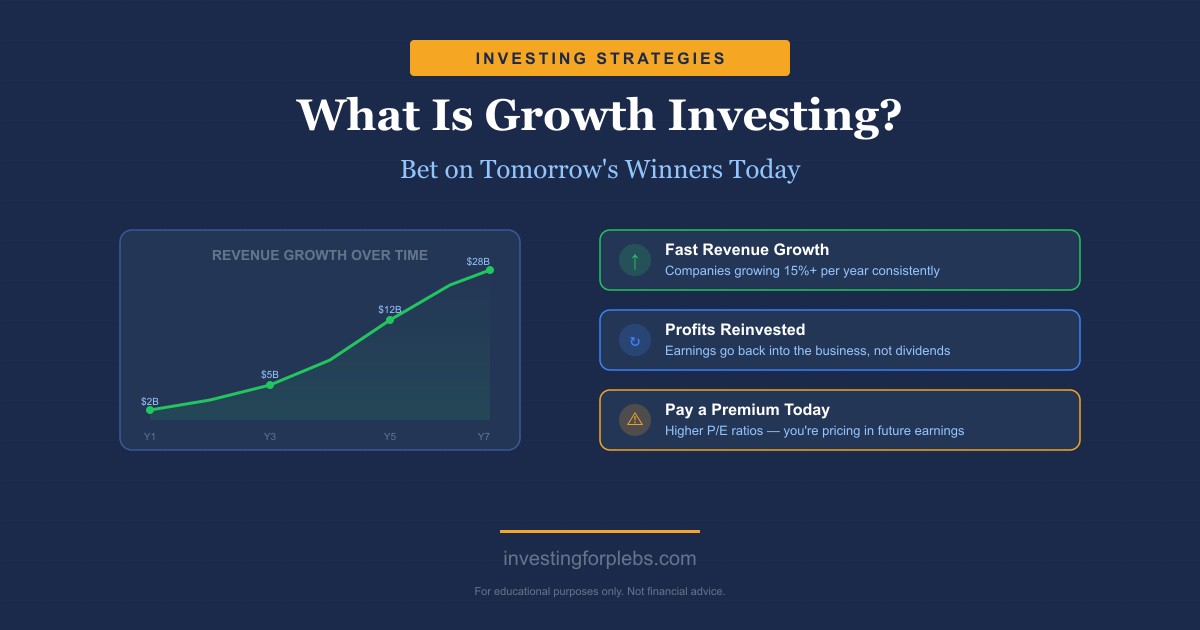
We see the continued proliferation of ever-evolving technology worldwide. There are many opportunities in tech; however, we must be vigilant about exuberance. Investors are willing to pay high premiums for growth.
- Uber Technologies (UBER) (5%)
- Uber is not a taxi company; it is the global liquidity layer for human movement. The fear that Autonomous Vehicles (AVs) like Tesla’s Cybercab or Waymo will kill Uber is fundamentally backward. High-cost AV fleets need maximum utilization to be profitable, and only Uber has the aggregate demand to keep those wheels turning 24/7. Uber will become the capital-light interface for every AV player, taking a high-margin cut of the fare without bearing the depreciation risk of the fleet.
- Amazon (AMZN) (5%)
- Amazon remains the undisputed king of infrastructure, both physical and digital. On the retail side, their logistics network has reached a density that makes ‘Next Day’ delivery economically unmatchable by any competitor. Simultaneously, AWS is the utility grid for the AI boom; as every enterprise rushes to deploy agents and LLMs, they are inevitably paying rent to Amazon’s compute and storage empire.
- Equal-weight Software sector ETF (XSW) (3%)
- XSW is the ultimate ‘catch-up‘ trade for 2026, betting on market breadth rather than historic concentration. While the mega-cap tech trade is crowded, this equal-weight ETF captures the mid-cap software companies poised to explode as AI moves from ‘infrastructure building’ (NVIDIA/Microsoft) to ‘application deployment’ (SaaS). With interest rates stabilizing, the valuation compression on these smaller, high-growth names is ending, offering significantly more upside than the already-perfectly priced giants.
- Kratos Defense & Security (KTOS) (2%)
- In a world shifting toward ‘attritable’ warfare (cheap, mass-producible drones), Kratos is the only pure-play bridging the gap between small commercial drones and massive fighter jets. Their ‘Valkyrie’ program positions them as the primary wingman for the U.S. Air Force’s collaborative combat aircraft (CCA) initiative. You own this as a high-beta defense play with significant acquisition potential by a Prime (Lockheed/Northrop) looking to modernize.
The Unloved Trade
A new theme in the Plebdex, we’ve added a few individual names that underperformed the market, despite exiting the year as stronger businesses.
- Berkshire Hathaway (BRK.B) (2%)
- This is your “Sleep Well at Night” hedge against high market valuations. While the rest of the market chases AI multiples expansion, Buffett’s empire is sitting on a historic fortress of cash, earning 4-5% risk-free while waiting for a correction to deploy capital. You own this because if the “soft landing” becomes a hard landing, Berkshire is the only buyer with the liquidity to scoop up distressed assets at generational lows.
- 2026 marks the first year with Warren’s protégé, Greg Abel, taking the helm.
- PayPal (PYPL) (2%)
- An extremely frustrating investment. PayPal is the classic “Garbage to Gold” value play; it is priced like a dying legacy bank despite still dominating global e-commerce volume. The thesis relies on the new “Fastlane” guest checkout technology, finally arresting market share loss to Apple Pay, proving that the company can return to profitable growth. You are buying this for the valuation disconnect—it is simply too cheap for the amount of free cash flow it generates.
- PayPal secured exclusive rights to agentic commerce, ensuring its technology laid the financial railroads and remains entrenched in the future of commerce.
- Netflix (NFLX) (2%)
- While it may seem odd to call Netflix “unloved,” it is often overlooked by tech investors chasing pure AI plays. The thesis here is “The Last Man Standing“: while Disney, Paramount, and Warner Bros struggle with unprofitable streaming segments, Netflix has reached escape velocity, with margins that rival those of software companies. The upside in 2026 isn’t subscriber growth, but the untapped pricing power of its ad-tier and its expansion into live events (like the WWE deal).
- We believe Netflix is the right player to buy Warner Bros (Universal) assets, which will further entrench their offering in homes for many years to come.
- During the company’s investor day, Netflix committed to growing its market cap to $1 trillion (>100% upside) from today’s prices by 2030 or around 20% compounding over the next 4 years.
- Nike (NKE) (2%)
- This is a pure “Turnaround” trade based on the return to wholesale basics after the Direct-to-Consumer (DTC) strategic error of the last few years. The brand lost shelf space to Hoka and On Running, but the new leadership’s focus on product innovation and repairing relationships with retailers (like Foot Locker) sets the stage for a cyclical recovery. You buy Nike when it’s boring, and inventory is bloated, betting that the “Swoosh” premium will return as margins normalize.
- Recent insider buys from the CEO and board members signal confidence in the business going forward. We believe Elliott Hill is the right leader at the helm.
- Coinbase (COIN) (2%)
- The “unloved” angle here is the fear of fee compression, but the thesis is that Coinbase is becoming the “State Street of Crypto.” In a Trump 2.0 regulatory environment, Coinbase’s value isn’t just in retail trading fees, but in being the trusted custodian for the entire ETF complex and institutional world. You own this not for the next Bitcoin spike, but because they are building the inevitable infrastructure layer for the tokenized economy.
Closing
We view 2026 as another strong year for equities with a few bumps along the way as the AI trade continues. We expect a 15-20% return on current holdings in 2026.
We appreciate you taking the time to read this year’s Plebdex article. We look forward to a profitable 2026! If you haven’t subscribed, please do.
Au revoir, fellow plebs – may the odds ever be in our favor!
Leave a Reply