
TL;DR:
– $100 is enough to start, and starting small is actually a feature, not a bug
– The default move: buy fractional shares in a broad index ETF (VOO, VTI, or equivalent)
– Your real return on the first $100 isn’t financial. It’s learning how to invest without fearing real money
Table of Contents
- Why $100 is the perfect amount to start with
- What should you actually do with $100?
- The emotional reality of investing $100
- Where to open an account
- What $100 won’t do (honest expectations)
Why $100 is the perfect amount to start with
Most financial advice treats $100 as “not enough to bother.” That’s wrong, and it’s advice that keeps people on the sidelines for years.
Here’s the counter-intuitive truth: $100 is the ideal first investment precisely because it’s small. The stakes are low enough that you can afford to feel things out, make small mistakes, and learn how markets work, all without a financial catastrophe if something goes sideways.
Think about what you’re actually buying when you invest your first $100. Yes, you’re buying shares of something. But more importantly, you’re buying experience: learning what it feels like to watch a portfolio fluctuate, building the habit of checking your account without panicking, discovering your own emotional reaction to a down day.
That education is worth far more than whatever the $100 itself will return in year one.
The cost of waiting (“I’ll start investing when I have more money”) is real. Every year you delay is a year you don’t build the habit. Compound interest needs time more than it needs a big initial balance. A $100 investment today that grows at 7% annually becomes about $761 in 30 years.
Start at $200/month a year from now and the math looks better, sure, but you also spent a year not learning what it actually feels like to be an investor. That matters.
Starting small also makes the psychology manageable. If you invest $100 and it drops to $92, you’ve lost $8. That’s a disappointing dinner out. You’ll survive.
But you’ll also have learned something real: what a market dip actually feels like in your gut, and whether you can resist the urge to panic-sell. That lesson on $100 is cheap. The same lesson on $10,000 is expensive.
For a deeper look at how small amounts compound into large ones over time, see our guide to compound interest.
What should you actually do with $100?
Here’s the honest, no-nonsense answer: buy a broad index ETF using fractional shares.
That’s it. That’s the recommendation. Let me explain why.
The default strategy: one broad index ETF
An index ETF is a fund that holds dozens or hundreds of stocks at once. Instead of betting on one company, you’re buying a tiny slice of the whole market. When you buy a single share of VTI (Vanguard Total Stock Market ETF), you’re essentially owning a piece of every publicly-traded company in the US. When you buy VOO (Vanguard S&P 500 ETF), you own a slice of the 500 largest American companies.
Why is this the right starting point?
- Instant diversification. One purchase, thousands of underlying companies. A single bad quarter at one company doesn’t sink your investment.
- Low fees. Index ETFs charge tiny annual fees, often 0.03% to 0.20%. That’s 3 to 20 cents per year on every $100 invested. Actively managed funds charge 10 to 20 times more and, historically, most of them underperform the index anyway.
- No stock-picking required. You don’t need to know which company will win. You’re betting that the US economy, broadly, continues to grow over decades. That’s a much more defensible bet than picking individual stocks.
Now, here’s the practical issue: a single share of VOO costs over $500. A single share of VTI costs over $200. You can’t buy either with $100.
That’s where fractional shares come in. Most modern brokerages let you invest a specific dollar amount (say, exactly $100) in an ETF that costs more per share than that. You’d own a fraction of a share. Same exposure, same returns, no minimum investment barrier.
For more on the difference between ETFs and index funds, read our explainer: ETF vs. Index Fund: What’s the Actual Difference?
What about individual stocks?
Buying individual stocks with your first $100 isn’t wrong, but it is higher-risk for a first investment.
Here’s the honest framing: if you buy Apple or Amazon with $100, you’re not diversified. That company’s fortunes (its next earnings call, its CEO’s health, its regulatory battles) directly determine whether your $100 grows or shrinks. That’s more risk than you need to take on as a beginner.
That said, if you’ve got a company you understand deeply and you want to practice evaluating a business, $100 is a reasonable “tuition payment” for that learning. Buy a fractional share of a company you know, watch it for a year, and read about why it moves up and down. Just understand that you’re taking on more risk, not less.
If you go that route, learn how to research the fundamentals before you buy.
The emotional reality of investing $100
Here’s something nobody tells you before your first investment: you will feel it drop.
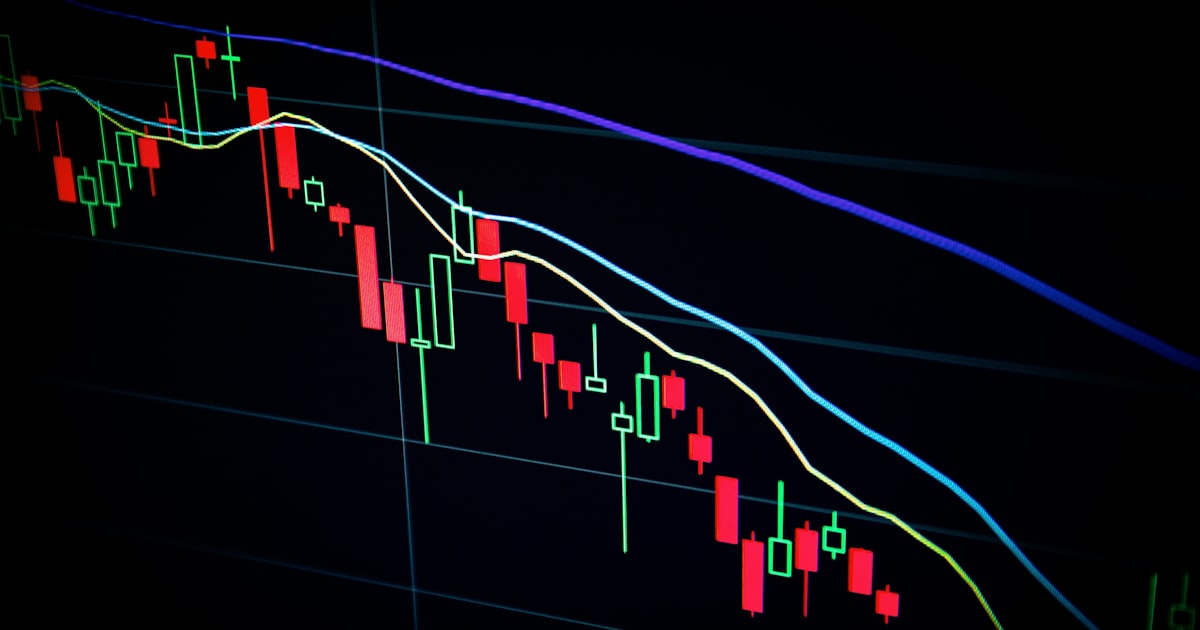
The market fluctuates constantly. Even healthy, long-term investments go down regularly, sometimes 1%, sometimes 5%, sometimes 20% during a rough stretch. When your $100 becomes $93, your brain doesn’t process “7% temporary decline in a historically upward-trending asset class.” It processes “$7 gone.”
This is the most important investment education available, and it costs only $7 to learn.
What most beginning investors discover is one of two things:
1. They feel the drop and stay calm. They understand, emotionally, that they’re in this for the long run. That’s a green light to invest more.
2. They feel the drop and want to sell immediately. That’s critical information about their own risk tolerance, and it’s better to learn that on $100 than on $10,000.
Neither reaction is wrong. But both are valuable data you simply cannot get from reading about investing. You have to feel it.
This is why the behavioral argument for starting small is so strong. The investor who starts with $100, learns to sit with volatility, and gradually increases their contributions is more likely to succeed long-term than the one who waits until they have “enough” and then panics at the first significant drop.
The natural next step after your first $100 is making it a habit. Investing $100 once is a transaction. Investing $100 every month, automatically and without thinking about it, is a practice. That’s dollar-cost averaging, and it’s how most successful everyday investors build real wealth over time.
Where to open an account
The mechanics of opening an investment account have never been simpler. Most of the major online brokerages now offer:
– No account minimums, so you can open and fund an account with exactly $100
– Commission-free trades, meaning no fee to buy or sell ETFs or stocks
– Fractional shares, so you can invest any dollar amount, not just whole-share prices
Platforms that offer all three include Fidelity, Charles Schwab, and Robinhood, among others. This is not an endorsement of any specific platform; features and fee structures change, so verify before you sign up.
A few things to double-check before choosing:
Fee structures. Even “commission-free” platforms can have fees buried elsewhere, like for options, wire transfers, or certain fund types. For a beginner buying index ETFs, fees should be minimal. Read the fine print.
Fractional shares. Not all brokerages offer fractional shares on all assets. If you plan to invest in broad index ETFs with $100, confirm your brokerage supports fractional share purchases for the ETF you want.
Account type. For most beginners, a standard taxable brokerage account is fine to start. If you’re investing for retirement and have earned income, look into a Roth IRA. The tax advantages are significant over long time horizons.
What $100 won’t do (honest expectations)
Let’s be completely clear: $100 will not make you rich this year.
If you invest $100 in an S&P 500 index fund and the market has an average year (around 10% return), you’ll have about $110 in twelve months. That’s $10, less than a pizza.
That’s fine. That was never the point.
The S&P 500 has returned roughly 10% annually on average, historically, but that’s a long-run average that includes brutal years (2008: -38%, 2022: -18%) and fantastic ones (2019: +31%, 2021: +27%). Your first year with $100 could end anywhere on that spectrum.
The actual opportunity is not the $100. It’s what the $100 becomes if you keep adding to it.
An investor who starts with $100 and adds $100 every month for 30 years, earning the historical nominal average of ~10%, ends up with roughly $227,000 (less in real purchasing power after inflation, but still life-changing). That’s not magic. That’s compound interest plus consistency plus time. The $100 you invest today is the first brick in that wall.
The habit is the investment. The $100 is just how you start building the habit.
This is educational content, not financial advice. All investing involves risk, including the possible loss of principal. Do your own research before making any investment decisions.
Enjoyed this? Get the Sunday Pleb every week, free market insights in plain English. Subscribe →
Sources: Dalbar QAIB Annual Report — Average Investor Underperformance | Vanguard: The case for low-cost index-fund investing | S&P 500 Historical Annual Returns (Macrotrends) | FINRA: Brokerage Fees and Commissions
Leave a Reply