
TL;DR: Stocks make you a part-owner of a company. Bonds make you a lender to a company or government. That difference — ownership vs. lending — drives everything else: how much you can earn, how much you can lose, and how each behaves when markets get rough. Most investors need to understand both, even if they start with one.
Table of Contents
- The core difference: ownership vs. lending
- How stocks work
- How bonds work
- Risk and return: what you’re actually trading off
- How stocks and bonds behave in different markets
- The 60/40 portfolio and age-based allocation rules
- When each makes sense for you
- The bottom line
The core difference: ownership vs. lending
What is the difference between stocks and bonds? At the most fundamental level, it comes down to your role.
When you buy a stock, you’re buying a piece of a company. You become a part-owner, a shareholder. If the company grows, the value of your piece grows. If it struggles, your piece shrinks. There’s no ceiling on the upside, and your piece could go to zero.
When you buy a bond, you’re making a loan. You hand money to a company or government, they promise to pay you a fixed interest rate over a set period, and at the end they return your principal. You’re a creditor, not an owner. Your upside is capped (you get back what was promised), but your downside is much more limited, because creditors get paid before shareholders if a company goes under.
That’s the whole game. Everything else (the risk profiles, the returns, how they fit in a portfolio) flows from this single distinction.
How stocks work
A stock (also called an equity or a share) represents fractional ownership of a publicly traded company. When Apple, Google, or any other company lists on a stock exchange, it sells pieces of itself to raise money. Buyers of those pieces become shareholders.
As a shareholder, you benefit two ways:
Price appreciation. If the company becomes more valuable, growing its revenues, profits, and market position, the stock price tends to rise. Sell at a higher price than you paid, and you’ve made a capital gain.
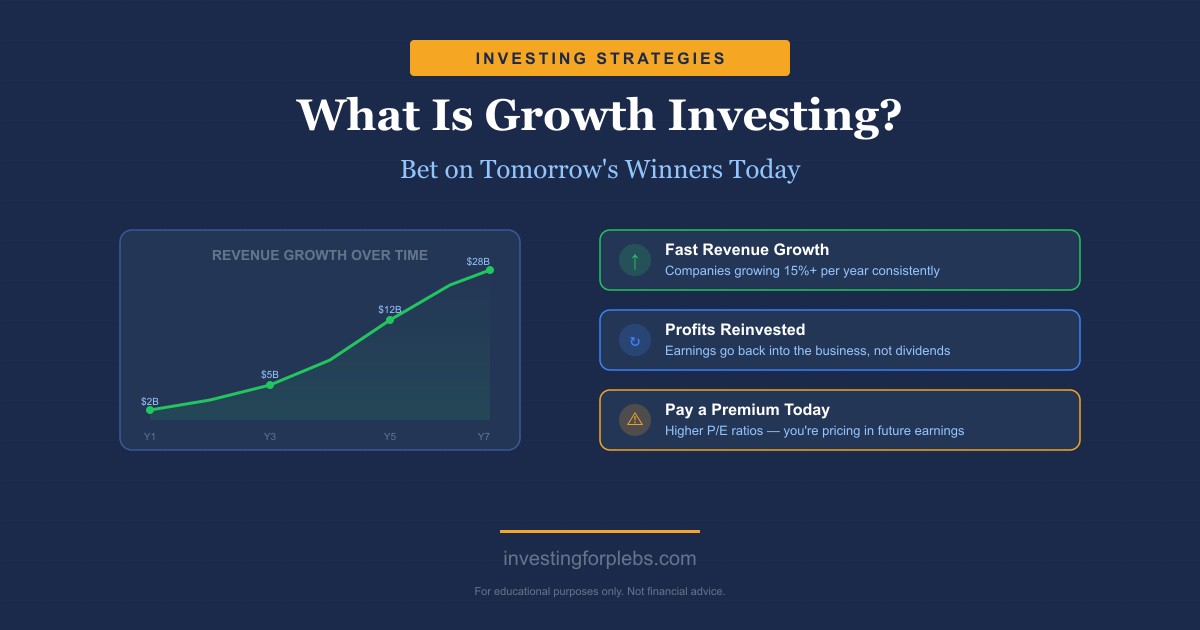
Dividends. Some companies distribute a portion of their profits to shareholders as cash payments called dividends. Not all stocks pay dividends (growth-focused companies typically reinvest profits instead), but many established businesses pay them quarterly. (See: What Is a Dividend Yield? for how to read dividend payments.)
There are no guarantees with stocks. A company can cut its dividend, miss its earnings targets, lose market share, or fail entirely. Stock investors are compensated for bearing that uncertainty, which is why stocks have historically delivered higher returns than bonds over long time horizons, and why they also fall harder during downturns.
How bonds work
A bond is a debt instrument. When you buy a bond, you’re lending money to the issuer: a company (corporate bond), the U.S. federal government (Treasury bond), a municipality (municipal bond), or a foreign government (sovereign bond).
The key terms of any bond:
- Face value (par value): The amount the issuer promises to return at maturity, usually $1,000 per bond.
- Coupon rate: The interest rate the issuer pays you, expressed as an annual percentage of face value. A $1,000 bond with a 5% coupon pays you $50 per year.
- Maturity date: When the issuer pays back the principal. Bonds can range from a few months (Treasury bills) to 30 years (long-term government bonds).
So if you buy a 10-year U.S. Treasury bond with a 4.5% coupon and $1,000 face value, you receive $45 per year for 10 years, then get your $1,000 back. Simple enough.
The catch: bond prices in the open market move inversely with interest rates. If rates rise after you buy a bond, your bond’s fixed coupon becomes less attractive, so its market price falls. This is why bonds aren’t “risk-free” even if you plan to hold them; their market value fluctuates while you hold them.
Credit risk is the other factor. U.S. Treasury bonds are traditionally considered the “safest” bonds because the federal government can tax and print money to pay its debts. But that ability to print is itself a risk: unlimited money creation erodes the purchasing power of the dollars you’re paid back. Corporate bonds carry different risk because companies can default, but investment-grade corporate bonds are backed by real assets and balance sheets with actual governance. Higher-yield (“junk”) bonds pay more interest because they’re issued by companies with shakier finances.
Risk and return: what you’re actually trading off
The blunt version: stocks are riskier and tend to deliver higher returns over time. Bonds are safer and tend to deliver lower returns. Both statements deserve unpacking.
Historical returns (long-run):
The U.S. stock market (S&P 500) has delivered an average annual return of roughly 10% before inflation, or about 7% after inflation, over the past century. Past returns don’t guarantee future results, but the historical spread between stocks and bonds is well-documented.
Long-term U.S. Treasury bonds have historically returned around 5–6% nominal, or 2–3% after inflation, over comparable periods. Investment-grade corporate bonds land somewhere in between.
But returns don’t come smoothly. Stocks can fall 30–50% in a bad bear market and take years to recover. Bonds can fall too (the 2022 bond market saw long-duration Treasury bonds drop 25-30% as rates spiked), but typically they don’t fall as far or as fast as stocks.
The core trade-off: the higher potential return of stocks comes with higher volatility: bigger swings up and bigger swings down. Bonds sacrifice upside in exchange for more predictability and capital preservation.
How stocks and bonds behave in different markets
For most of modern investing history, stocks and bonds moved in opposite directions. When the economy contracted and stocks fell, investors fled to bonds as a safe haven. Demand for bonds rose, bond prices rose, and the bonds in a portfolio cushioned the blow. This is why the classic balanced portfolio worked: your bonds stabilized you when your stocks crashed.
That relationship held for most of the 2000s and 2010s. The 2008 financial crisis is the textbook example: stocks fell roughly 57% from peak to trough, but Treasury bonds rallied as investors sought safety. (See: What Is a Bull vs. Bear Market? for how those cycles work.)
The 2022 exception. The traditional stock-bond relationship broke down badly in 2022. The Federal Reserve hiked interest rates aggressively to fight inflation, which caused both stocks and long-term bonds to fall simultaneously. The S&P 500 fell about 25% while long-duration Treasury bonds fell more than 20%. There was almost nowhere to hide. This reminded investors that the stock-bond correlation isn’t fixed. When inflation is the enemy and rates are rising fast, both assets can suffer at the same time.
What that means in practice: bonds are generally a stabilizer, but they’re not a perfect hedge. Their protective effect depends on the cause of the downturn.
The 60/40 portfolio and age-based allocation rules
The most widely cited portfolio framework is the 60/40 portfolio: 60% stocks, 40% bonds. The logic is simple: stocks provide growth over time, bonds provide stability and income, and the mix cushions volatility without abandoning return potential entirely.
60/40 isn’t a magic formula. But it reflects a real principle: as you add bonds to a stock-heavy portfolio, you reduce its volatility more than you reduce its returns, up to a point. That trade-off is the core idea behind portfolio diversification: mixing assets that don’t move in lockstep can reduce your overall risk without giving up as much return as you’d expect.
The age-based rule of thumb you’ll often hear: subtract your age from 110 (or 120) to get your stock allocation. So a 30-year-old might hold 80% stocks / 20% bonds; a 60-year-old might hold 50% stocks / 50% bonds. The logic: younger investors have time to ride out market crashes, so they can tolerate more stock volatility. Older investors are closer to needing the money, so they shift toward the stability bonds offer.
These are rough heuristics, not prescriptions. The right allocation depends on your timeline, income, risk tolerance, and what you’ll actually do when markets fall, not just what looks rational on paper.
Target-date funds in 401(k) plans do this automatically. A “2055 fund” starts very stock-heavy and gradually shifts toward bonds as 2055 approaches. If you have a target-date fund in your retirement account, you’re already using a version of this approach. Dollar cost averaging into a target-date fund is one of the most sensible default strategies for long-term investors.
When each makes sense for you
Favor more stocks when:
- You have a long time horizon (10+ years before you need the money)
- You can genuinely leave the money invested through a 30–50% market downturn without panic-selling
- Your goal is long-term wealth building rather than current income or capital preservation
- You’re contributing on a regular schedule and benefiting from compounding over time
Favor more bonds when:
- You’re within 5–10 years of needing the money (retirement, a large purchase, an emergency fund that must be stable)
- You need predictable income, since retirees often rely on bond coupons as a source of cash flow
- You know yourself and know a big stock drop would cause you to sell at the worst time
- You’re building a portfolio that simply can’t afford to fall 40%, because the consequences are real and near-term
A note on “safety.” Bonds feel safer, and in the short term they often are: less volatility, predictable income. But “safer” isn’t the same as “safe.” Government bonds lose purchasing power to inflation over time, especially when governments print money to cover their debts. Corporate bonds carry default risk but at least have actual governance and balance sheets behind them. And low-yield bonds held over 20 years may not keep up with your actual expenses. The risk in being too conservative is not running out of money from volatility. It’s running out of money from inadequate growth.
The bottom line
Stocks and bonds are different tools for different jobs. Stocks give you ownership, upside, and volatility. Bonds give you fixed income, stability, and a ceiling on returns.
Most investors benefit from some mix of growth assets and stability assets. A portfolio of 100% stocks is maximally volatile; a portfolio of 100% bonds will likely get outpaced by inflation over decades. If you do want fixed-income exposure, consider corporate bonds or alternatives like gold rather than defaulting to government debt.
The key question isn’t “stocks or bonds?” It’s “what mix of stocks and bonds matches my timeline, my goals, and my ability to stay invested when things get ugly?” That answer changes as you age, as your circumstances change, and as markets shift.
Neither asset class is inherently superior. They’re tools. Understanding what each does is the first step to building a portfolio that actually serves you.
This content is for educational purposes only and does not constitute financial advice. investingforplebs.com is not a registered investment advisor. Please consult a qualified financial professional before making investment decisions.
Enjoyed this? Get The Sunday Pleb every week — plain-English investing insights, free. Subscribe →
Sources: U.S. Treasury: TreasuryDirect | SEC Investor.gov: Bonds | Vanguard: The Case for Low-Cost Index-Fund Investing | Morningstar: 2022 Market Review


Leave a Reply