
TL;DR: A bull market means stock prices have risen at least 20% from a recent low. A bear market means they’ve fallen at least 20% from a recent high. You’ll hear these terms constantly in financial news, but understanding what causes each one, and what smart investors actually do during them, matters far more than the labels.
Table of Contents
- The 20% rule: defining bull and bear markets
- Real historical examples
- What causes a bull market
- What causes a bear market
- What investors typically do (and the common mistakes)
- Why timing the market based on these labels is a trap
- The bottom line
The 20% rule: defining bull and bear markets
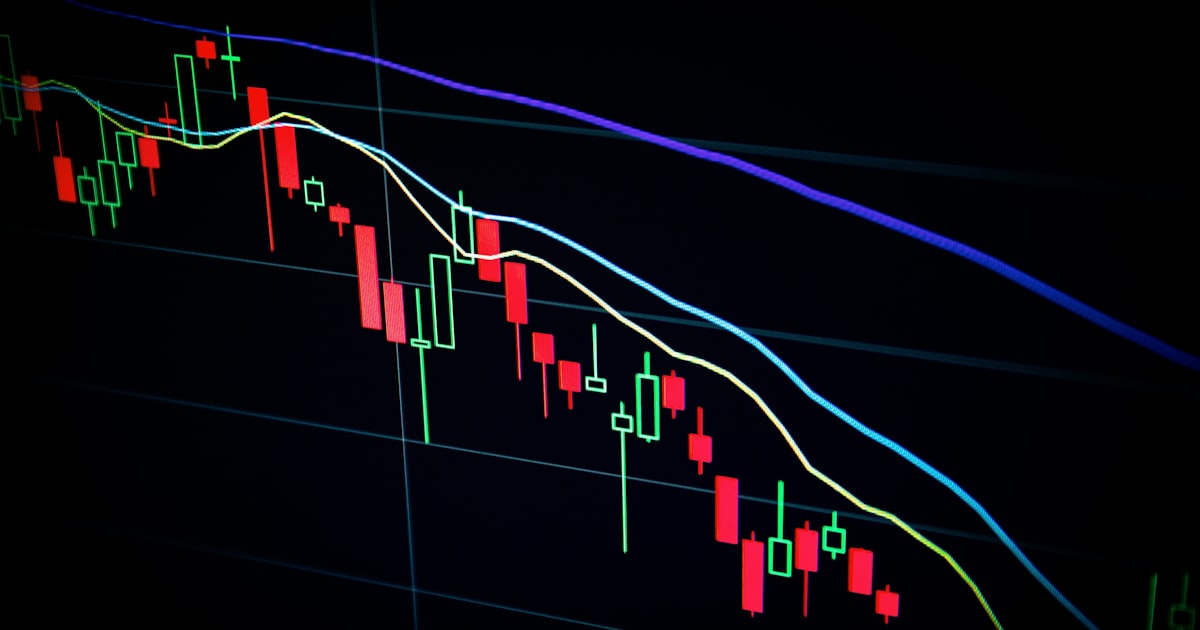
A bear market is when a major stock index (like the S&P 500) falls 20% or more from its most recent high.
A bull market is when prices rise 20% or more from a recent low (usually the bottom of the prior bear market).
That’s it. The 20% thresholds are the standard convention, though you’ll sometimes hear the term “correction” used for a decline of 10–20%. That’s a pullback, but not technically a bear market.
The names come from how the animals attack: a bull thrusts its horns upward, a bear swipes its claws downward. Handy imagery for remembering which is which.
One important nuance: these aren’t on/off switches. Markets don’t announce “bear market officially begins now.” The 20% threshold is typically confirmed in hindsight, once the decline has already happened. By the time the news is calling it a bear market, you’re probably already deep into one.
Real historical examples
The 2008–2009 bear market is the one most people think of first. The S&P 500 peaked in October 2007 and didn’t bottom until March 2009 — a decline of roughly 57%. The collapse of the housing market set off cascading failures across the financial system, wiping out years of gains. The index didn’t fully recover until 2013.
The COVID-19 bear market in early 2020 was historically fast. The S&P 500 fell about 34% from its February 19 peak to its March 23 low — just 33 days, the fastest bear market ever recorded. The recovery was equally jarring: new all-time highs within about five months.
The 2022 bear market was different in character. The S&P 500 fell roughly 25% from its January 2022 peak to its October 2022 trough, driven by the Federal Reserve’s aggressive rate-hiking campaign to fight inflation. Unusually, bonds fell at the same time as stocks, offering investors almost nowhere to hide.
The 2009–2020 bull market was the longest in modern history, about 11 years. After bottoming out in March 2009, the S&P 500 rose through multiple scares (the European debt crisis, the 2015–16 China slowdown, several corrections along the way) before COVID finally ended it.
Each cycle has its own cause and character. What they share is that nobody predicted exactly when they’d start or end.
What causes a bull market
Bull markets tend to have the same ingredients:
Strong earnings growth. When companies are consistently growing profits, investors pay more for their shares. Rising earnings are the foundation of rising stock prices over time.
Low interest rates. When borrowing is cheap, companies invest more, consumers spend more, and the economy expands. Low rates also make bonds less attractive relative to stocks, pushing money toward equities.
Broad economic expansion. Employment is high, GDP is growing, consumer confidence is up. That backdrop makes it easier for businesses to grow, and for investors to feel optimistic.
Positive sentiment and momentum. Markets aren’t purely rational. Once a bull market gets going, rising prices attract more buyers, which pushes prices higher, which attracts more buyers. Sentiment feeds itself. Market capitalization rises across the board as prices climb.
What causes a bear market
Bear markets usually start with one (or a combination) of these:
Recession or economic slowdown. When the economy contracts, corporate earnings fall, unemployment rises, and investors reassess what companies are worth. The 2008 bear was classic recession-driven.
Rising interest rates. Higher rates make borrowing more expensive for companies and consumers. They also make bonds more competitive versus stocks. The 2022 bear market was largely a rate-driven repricing.
External shocks. Events nobody modeled: a pandemic, a geopolitical crisis, a banking collapse. These trigger rapid selling as uncertainty spikes and investors race to reduce risk.
Valuations that got too stretched. Sometimes markets simply rise too far, too fast. The dot-com crash (2000–2002) saw the Nasdaq fall roughly 78% after technology stocks had been priced for growth that never arrived. When the reality doesn’t match the expectations baked in, the correction can be severe.
What investors typically do (and the common mistakes)
During bull markets, investors tend to take on more risk. They add to positions, chase high-growth stocks, and often convince themselves the market will just keep rising. The mistake here is overconfidence: taking on more risk than you understand, and failing to rebalance as valuations stretch.
During bear markets, the common playbook is panic. Investors sell (often near the bottom) to “stop the bleeding.” They move to cash and wait for things to “calm down” before getting back in. Then they miss the recovery, which often happens fast and without warning. The 2020 bounce is the extreme example: if you sold at the March 2020 bottom and waited for “clarity,” you missed one of the sharpest recoveries in market history.
The research on what happens to investors who try to move in and out based on market conditions is bleak. Dalbar’s Quantitative Analysis of Investor Behavior consistently finds that the average equity fund investor significantly underperforms the S&P 500 over 20-year periods, largely because of poorly timed buy and sell decisions.
Why timing the market based on these labels is a trap
Here’s the core problem: by the time everyone agrees you’re in a bull or bear market, you’re already deep into it.
Bear markets get called after the 20% drop has already happened. Bull markets get confirmed after the 20% recovery has already started. In both cases, the best action (buy low, stay invested) happens in the period of maximum uncertainty, before the label gets applied.
The more practical approach is to stay consistently invested through cycles. Dollar cost averaging, investing a fixed amount on a regular schedule regardless of market conditions, is specifically designed for this. You don’t need to know whether we’re in a bull or bear market. You just keep buying. Your purchases during bear markets buy more shares at lower prices. Your purchases during bull markets keep compounding.
Nobody rings a bell at the top or the bottom. Professional investors with massive research teams fail to call these transitions consistently. Individual investors trying to time moves based on headlines fare worse. The track record of market timing is poor enough that most investment professionals quietly stopped recommending it.
Understanding bull and bear markets is genuinely useful. It helps you make sense of what the market is doing and why. But using the labels as a trading signal is a different thing entirely.
The bottom line
Bull markets and bear markets are part of investing. They’ve always existed and always will. Each is driven by real economic forces (earnings, rates, sentiment, shocks) that evolve in ways no one reliably predicts.
What most investors get wrong is treating these cycles as something to trade around. The evidence consistently points the other way: stay invested, keep contributing, resist the urge to move to cash when things get scary. The investors who do best across full cycles are the ones who keep showing up — not the ones who called the turns.
This content is for educational purposes only and does not constitute financial advice. investingforplebs.com is not a registered investment advisor. Please consult a qualified financial professional before making investment decisions.
Enjoyed this? Get The Sunday Pleb every week: plain-English investing insights, free. Subscribe →
Sources: S&P 500 Bear Market Data (Yardeni Research) | COVID-19 Market Crash (Federal Reserve History) | DALBAR Quantitative Analysis of Investor Behavior | 2022 Bear Market Overview (Morningstar) | Bull Market Definition (SEC Investor.gov)
Leave a Reply